Dalian Youyan Plastic Machinery Co., Ltd.
Couplet: Feng Manager
Phone/fax:086-0411-86260347
Hand:18624289888
13604263838
Mail box:21272059@qq.com
Network access:www.dlyouyan.com
Address: Chinese Lushunkou District of Dalian City, the three streams town (take Tuchengzi Dalian to Lushun Road westbound vehicle airport about 200 meters in front of about 100 meters)
1、 The importance of adjusting film tension
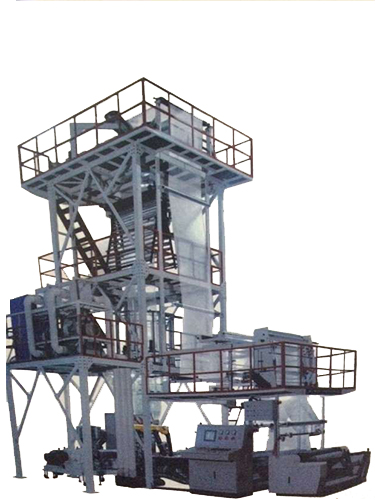
The control of film tension is one of the key factors in ensuring product quality during the production process of a three-layer co extrusion blown film machine. Appropriate film tension can ensure uniform thickness, smooth surface, and stable mechanical properties of the film, while avoiding problems such as wrinkles, uneven stretching, or breakage during the production process. Excessive film tension may lead to excessive stretching of the film, affecting its physical properties; If the tension is too low, it may cause the film to loosen, affecting the quality of subsequent winding. Therefore, mastering the correct method of adjusting film tension is crucial for producing high-quality multilayer composite films.
2、 Basic components of thin film tension system
The tension system of a three-layer co extrusion blown film machine usually consists of the following main parts:
Traction device: including upper and lower traction rollers, responsible for pulling the inflated film bubbles upwards to form a stable film tube.
Tension detection device: usually uses tension sensors or tension detection rollers to monitor the tension changes of the film in real time.
Control system: PLC or dedicated controller, receives tension signals and adjusts traction speed to maintain constant tension.
Human machine interface: an operation panel used to set and display tension parameters.
Auxiliary devices such as guide rollers, flattening rollers, etc., help maintain the smooth operation of the film.
3、 Specific steps for adjusting film tension
1. Preparation before startup
Before adjusting the tension of the film, the following preparations need to be made:
Check whether each guide roller and traction roller is clean, free of stains or damage
Confirm that the tension sensor is working properly and there is no interference in signal transmission
Check if the air and circuit connections are normal
Preheat the equipment to operating temperature to ensure uniform melting of raw materials in each layer
2. Preliminary tension setting
Set the initial tension value based on the material, thickness, and width of the film:
For common materials such as PE/PP, the initial tension is usually set at 5-15N/cm width
Thicker films require greater tension, while thinner films require less tension
Three layer composite film needs to consider the different shrinkage characteristics of each layer material
3. Adjustment of traction speed
Traction speed directly affects film tension:
Increasing traction speed will increase film tension
Reducing traction speed will decrease film tension
When adjusting, gradually change the speed and observe the changes in the film state
4. Bubble cooling control
The cooling effect of film bubbles affects the shrinkage and tension of thin films:
Insufficient cooling can lead to significant film shrinkage and increased tension
Excessive cooling may lead to film embrittlement and uneven tension
Adjust the air volume and cooling water temperature of the air ring to achieve better cooling effect
5. Tension balance adjustment
Special attention should be paid to the tension balance between each layer of three-layer co extruded film:
By adjusting the speed of each extruder layer and changing the thickness ratio of each layer
Observe the cross-section of the film to ensure even distribution of each layer
Using an online thickness gauge to assist in adjusting the thickness of each layer
6. Control of winding tension
The tension control during the winding stage is equally important:
The initial winding tension is usually set at 70-90% of the traction tension
As the roll diameter increases, taper tension control should be adopted to gradually reduce the tension
Avoid winding too tightly, which may cause the film to have a "hard core" or "chrysanthemum pattern"
4、 Common problems and solutions
1. Wrinkles appear on the film
Possible reasons and solutions:
Uneven tension: Check the parallelism of each guide roller and adjust the tension setting
Uneven cooling: Adjust the uniformity of the air outlet of the air ring
Unstable membrane bubble: Check the compressed air system to stabilize the internal pressure of the membrane bubble
2. Uneven film thickness
Possible reasons and solutions:
Uneven temperature of the mold head: check and adjust the temperature of each section of the mold head
Extrusion fluctuation: Check the stability of screw speed and clean the filter screen
Traction speed fluctuation: Check the traction motor and transmission system
3. The film is prone to breakage
Possible reasons and solutions:
Excessive tension: Reduce traction and winding tension appropriately
Raw material issue: Check the quality of raw materials and adjust the melt temperature
Equipment damage: Check for burrs or material buildup on the mold head, air ring, etc
5、 Precautions for tension adjustment
Gradual adjustment principle: Any parameter adjustment should be carried out gradually to avoid significant changes that may lead to production instability.
Record adjustment data: Parameter changes and effects should be recorded for each adjustment, and a production database should be established.
Comprehensive consideration of factors: Tension adjustment needs to take into account the synergistic effect of multiple factors such as temperature, speed, and cooling.
Safe operation: Pay attention to the operating parts of the equipment during the adjustment process to avoid mechanical injury.
Regular maintenance: Regularly inspect all components of the tension system to ensure measurement and control accuracy.
By using the above methods and precautions, operators can effectively adjust the film tension of the three-layer co extrusion blown film machine to produce high-quality composite film products. In actual production, it is necessary to make appropriate adjustments based on specific equipment models, raw material characteristics, and other factors, accumulate experience data, and form better process parameters suitable for the production of the enterprise.