Dalian Youyan Plastic Machinery Co., Ltd.
Couplet: Feng Manager
Phone/fax:086-0411-86260347
Hand:18624289888
13604263838
Mail box:21272059@qq.com
Network access:www.dlyouyan.com
Address: Chinese Lushunkou District of Dalian City, the three streams town (take Tuchengzi Dalian to Lushun Road westbound vehicle airport about 200 meters in front of about 100 meters)
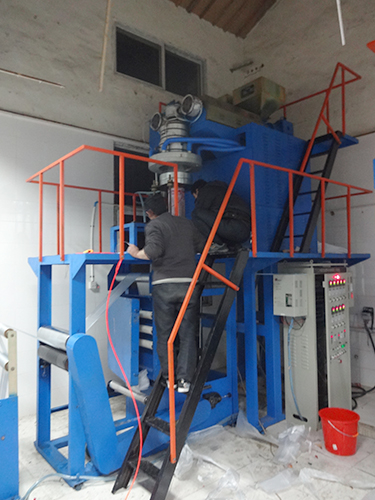
1、 Preparation work before mold replacement
Equipment shutdown inspection
Ensure that the unit is completely shut down, turn off the main power, and hang a "No Operation" warning sign
Confirm that the extruder temperature has dropped to the safe range (usually below 100 ℃)
Check if the pressure in the mold head area has been completely released
Preparation of tools and materials
Prepare specialized lifting equipment (such as electric hoists, hydraulic trucks, etc.)
Check if the specialized tools for the mold head (torque wrench, heating rod, etc.) are complete
Prepare cleaning supplies (copper shovel, asbestos cloth, specialized cleaning agents, etc.)
Prepare installation accessories for the new mold (sealing rings, bolts, etc.)
Personnel safety protection
Operators must wear a full set of protective equipment (heat-resistant gloves, protective face shields, heat-resistant clothing, etc.)
Confirm that the lighting in the work area is sufficient and the ground is free of oil and water stains
Arrange at least two people to work together and clarify the division of labor
2、 Mold disassembly process
Heating system processing
Disconnect the power supply of the die head heater and mark the wiring position
Slowly cool down to below 80 ℃ before starting disassembly
Retain precision components such as thermocouples to prevent damage
Bolt disassembly sequence
Use diagonal sequence to gradually loosen bolts
Use a specialized wrench to avoid slipping teeth
Record the length and specifications of bolts in each part
Precautions for mold head lifting
Confirm that the rated load of the lifting equipment is greater than the weight of the mold
Use specialized lifting equipment and prohibit the direct contact of steel wire ropes with molds
Maintain horizontal lifting to avoid collision with surrounding equipment
3、 New mold installation specifications
Mold inspection and pretreatment
After the arrival of the new mold, the dimensions of the excellent rows will be verified
Clean the mold cavity and flow channel, remove rust proof oil
Check the flatness of the sealing surface (using red lead powder for inspection)
Installation and positioning requirements
Use positioning pins to ensure accurate alignment
Tighten bolts evenly in stages (50% torque first, then 80%)
Operate according to the torque value table provided by the manufacturer
Temperature system recovery
Install the heating strip correctly and maintain even spacing
The installation position of the thermocouple meets the process requirements
Check the insulation resistance of each heating zone
4、 Key points of debugging after mold change
Temperature rise program control
Segmented heating (50 ℃ every 30 minutes)
Keep warm for more than 2 hours after reaching the set temperature
Verify the actual temperature using an infrared thermometer
Sealing test
Check all connections under low voltage conditions
Use specialized leak detectors to detect minor leaks
Only after confirming that there is no melt leakage can the pressure be increased
Process parameter adjustment
The initial extrusion speed is controlled at 30% of the rated value
Observe the uniformity of mold lip discharge
Gradually adjust parameters such as wind ring and traction
5、 Common problem handling
Difficulty in mold installation
Check if the positioning pin is aligned
Confirm that the mold body is not deformed (using a ruler for inspection)
Do not forcefully strike to avoid damaging the mating surface
Abnormal temperature rise
Heating zone not heating up: check the fuse and relay
Large temperature fluctuations: Verify thermocouple wiring
Local overheating: adjust the position of the heating belt
Uneven discharge
Clean the lip of the mold (using copper tools)
Check if there is any blockage in the mold cavity flow channel
Adjust the lip gap of the mold (requires professional personnel to do so)
6、 Safety precautions
high-temperature protection
The surface temperature of the mold head can reach over 200 ℃
Double layer protection is necessary when in contact with the melt
Prepare emergency cooling equipment
Mechanical injury prevention
Do not manually enter the mold lip to adjust the gap
Evacuate personnel from hazardous areas during lifting operations
Use specialized tools instead of temporary substitutes
Electrical safety
Do not operate electrical components with wet hands
Regularly check the insulation condition of the circuit
The grounding system must be in good condition
7、 Maintenance suggestions
Mold storage specifications
Vertically placed on a dedicated rack
Apply anti rust oil to the mold cavity
Protecting precision mating surfaces
Regular inspection items
Check the pre tightening force of bolts every month
Quarterly testing of lip flatness
Annual professional manufacturer maintenance
Service life management
Record the hours of mold usage
Regular replacement of key components
Establish mold archives
By strictly following the above mold replacement operation procedures, the efficiency of mold replacement can be improved (ideally controlled within 4 hours), waste generation can be reduced (mold replacement waste can be controlled within 50kg), and the service life of the mold can be extended (usually up to 3-5 years). After each mold change, a complete mold change record form should be filled out, including information on the operator, time, abnormal situations, etc., to provide a basis for subsequent maintenance.