Dalian Youyan Plastic Machinery Co., Ltd.
Couplet: Feng Manager
Phone/fax:086-0411-86260347
Hand:18624289888
13604263838
Mail box:21272059@qq.com
Network access:www.dlyouyan.com
Address: Chinese Lushunkou District of Dalian City, the three streams town (take Tuchengzi Dalian to Lushun Road westbound vehicle airport about 200 meters in front of about 100 meters)
1、 The importance of mold cleaning for blown film unit
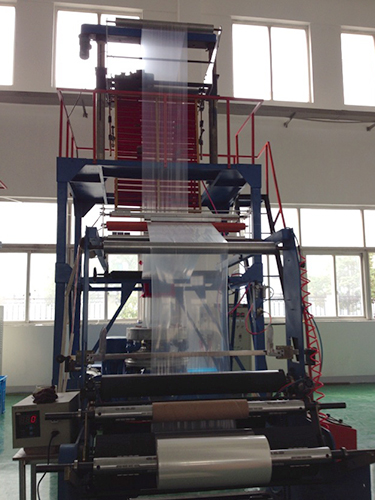
As a key equipment for plastic film production, the cleanliness of the molds in Dalian blown film unit directly affects product quality and production efficiency. After long-term use of molds, plastic residues, decomposition products of additives, carbides and other pollutants will accumulate. These deposits not only affect the appearance quality of the film, such as producing defects such as stripes and spots, but also change the flow state of the melt, leading to uneven thickness and decreased mechanical properties. More seriously, pollutants may corrode the surface of the mold, shorten its service life, and increase maintenance costs.
The fundamental purpose of mold cleaning is to maintain stable production process parameters, ensure product quality consistency, extend mold service life, and reduce energy consumption. A clean mold can ensure uniform flow of the melt, make the film thickness distribution more reasonable, and reduce the scrap rate. Therefore, establishing a scientific mold cleaning frequency is an important link that cannot be ignored in blown film production management.
2、 The main factors affecting the frequency of mold cleaning
1. Characteristics of raw materials
There are significant differences in the degree of mold pollution caused by different plastic raw materials. PVC, EVA and other materials containing chlorine or vinyl acetate are prone to decomposition and produce corrosive substances, requiring more frequent cleaning; LDPE, HDPE and other polyolefin materials are relatively stable, and the cleaning interval can be appropriately extended. Additives such as color masterbatch and anti-static agents can also accelerate the accumulation of pollutants, especially formulations containing inorganic fillers are more likely to deposit on the surface of the mold.
2. Production process parameters
High temperature processing can accelerate plastic decomposition, and the decomposition rate may double for every 10 ℃ increase in temperature. When operating continuously with high output, the mold bears a greater heat load and accumulates pollutants faster. The process with a high inflation ratio requires higher mold cleanliness, as any small unevenness will be magnified. Production lines with frequent shutdowns are more prone to produce decomposition products due to large temperature fluctuations.
3. Product quality requirements
High end products such as optical grade films and food packaging films have high requirements for mold cleanliness, and slight contamination may lead to product failure; However, agricultural films, industrial packaging films, etc. have relatively relaxed surface requirements. The thinner the film thickness, the higher the sensitivity to the mold state, and more frequent maintenance is required.
4. Mold design and materials
Molds with complex structures are more prone to accumulating pollutants in blind spots. Molds with chrome plating or special surface treatment have good anti adhesion and can extend the cleaning cycle. The efficiency of the cooling system of the mold also affects the rate of pollutant formation, and areas with poor cooling are more prone to scaling.
3、 Scientific determination of mold cleaning frequency
1. Standard Recommendations
Based on industry experience, it is recommended to thoroughly clean the mold every 200-300 hours of continuous operation for ordinary polyethylene blown film production; Sensitive materials such as PVC may require cleaning every 100-150 hours. For a 24-hour continuous operation production line, a cleaning cycle of 7-10 days is usually arranged. After the first 50 hours of use, the new mold should be inspected and cleaned to remove processing residues and initial wear particles.
2. Dynamic adjustment based on production data
A more scientific approach is to establish a mold condition monitoring system that records production time, output, energy consumption, scrap rate, and other data after each cleaning. When the following signals appear, early cleaning should be considered:
Unit output energy consumption increases by more than 5%
The thickness of the product is very poor and has increased beyond the allowable value
Surface defect rate exceeds the upper limit of quality
Abnormal increase in mold pressure
3. Frequency arrangement for different cleaning levels
Daily maintenance: Perform simple lip cleaning on each shift using a copper spatula or specialized tool
Intermediate cleaning: Disassemble the mold lip for local cleaning every week
Deep cleaning: completely disassemble the mold monthly or quarterly and perform ultrasonic or chemical cleaning
4、 Better Practice for Mold Cleaning
1. Selection of cleaning methods
Mechanical cleaning: using brass brushes, wooden or plastic scrapers, suitable for daily maintenance
Chemical cleaning: Soak in specialized mold cleaning agents, pay attention to selecting products compatible with the mold material
Ultrasonic cleaning: Significant effect on complex structure molds, but time and power need to be controlled
High temperature decomposition method: Heat the mold to 500 ℃ to carbonize the organic matter, and then mechanically remove it
2. Standardization of cleaning process
The complete cleaning process should include:
Shutdown and cool down to safe temperature
Dismantle the mold and mark the positions of each component
Choose the appropriate cleaning method
Check for wear and corrosion
Reassemble and test the sealing performance
Record the comparison of the status before and after cleaning
3. Treatment after cleaning
After cleaning, specialized rust inhibitors should be applied immediately, especially for molds that have been out of use for a long time. After reinstallation, a low-speed trial run is required, gradually raising the temperature to the working temperature. It is recommended to establish a mold cleaning file, recording the time, method, problems discovered, and solutions for each cleaning.
5、 Technical measures to extend the cleaning interval
Use high-quality mold steel and perform surface treatment (such as chrome plating, nitriding)
Optimize process parameters to avoid excessive temperature and prolonged residence time
Regularly add mold cleaning masterbatch to reduce the adhesion of pollutants
Install an online monitoring system to monitor the real-time status of the mold
Maintain appropriate insulation temperature during shutdown to avoid material solidification in the mold
There is no unified standard for the cleaning frequency of blown film unit molds, and it needs to be dynamically adjusted according to specific production conditions. The scientific approach is to establish a preventive maintenance system based on data, rather than a simple fixed cycle. Through a reasonable cleaning plan, correct cleaning methods, and comprehensive record analysis, it is possible to maximize the efficiency of mold use and reduce production costs while ensuring product quality. It is recommended that companies develop detailed mold cleaning SOPs based on their own situation and continuously optimize and improve them.