Dalian Youyan Plastic Machinery Co., Ltd.
Couplet: Feng Manager
Phone/fax:086-0411-86260347
Hand:18624289888
13604263838
Mail box:21272059@qq.com
Network access:www.dlyouyan.com
Address: Chinese Lushunkou District of Dalian City, the three streams town (take Tuchengzi Dalian to Lushun Road westbound vehicle airport about 200 meters in front of about 100 meters)
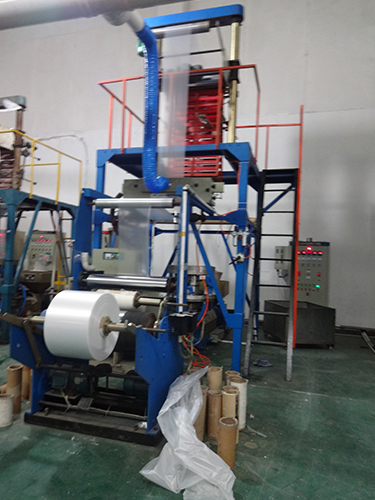
Dalian plastic blown film machine is a commonly used equipment in the plastic processing industry, mainly used for producing plastic films. However, during use, plastic film blowing machines may experience various malfunctions, affecting production efficiency and product quality. Here are some common faults and their solutions to help operators quickly troubleshoot and take corresponding measures.
1. Uneven film thickness
Fault phenomenon: The thickness of the film is inconsistent, with some areas being too thick or too thin.
Possible reasons:
The temperature of the mold head is uneven.
The screw speed of the extruder is unstable.
Uneven cooling of the air ring.
The traction speed does not match.
resolvent:
Check if the heating coil of the mold head is working properly to ensure even temperature distribution.
Adjust the screw speed of the extruder to maintain stability.
Check the air volume and speed of the air ring to ensure even cooling.
Adjust the traction speed to match the extrusion speed.
2. Bubbles or impurities on the surface of the film
Fault phenomenon: Bubbles, black spots, or impurities appear on the surface of the film.
Possible reasons:
The raw materials contain moisture or impurities.
The extruder temperature is too high, causing the raw materials to decompose.
The filter screen is clogged.
resolvent:
Fully dry the raw materials to remove moisture.
Reduce the temperature of the extruder to avoid overheating and decomposition of raw materials.
Regularly replace or clean the filter screen.
3. Poor transparency of the film
Fault phenomenon: The film has low transparency and appears foggy or opaque.
Possible reasons:
The extrusion temperature is too low, and the raw materials are not fully melted.
The cooling rate is too fast, resulting in uneven crystallization.
Poor quality of raw materials or unreasonable formula.
resolvent:
Properly increase the extrusion temperature to ensure that the raw materials are fully melted.
Adjust the wind speed of the cooling air ring to avoid rapid cooling.
Check the quality of raw materials and optimize the formula.
4. Thin film rupture or breakage
Fault phenomenon: The film breaks or fractures during the production process.
Possible reasons:
The traction speed is too fast.
Uneven discharge from the mold head.
The film thickness is too thin.
Uneven cooling of the air ring.
resolvent:
Reduce the traction speed to match the extrusion speed.
Check the discharge situation of the mold head and adjust the gap between the mold heads.
Increase the thickness of the film to avoid being too thin.
Adjust the cooling effect of the air ring to ensure uniformity.
5. The extruder screw is stuck or the speed is abnormal
Fault phenomenon: The extruder screw cannot rotate normally or the speed is unstable.
Possible reasons:
Mixing metals or other hard objects into the raw materials.
The extruder temperature is too low and the raw material is not melted.
The screw or barrel is severely worn.
resolvent:
Check for foreign objects in the raw materials and clean them thoroughly.
Raise the extruder temperature to ensure the melting of raw materials.
Check the wear of the screw and barrel, and replace them if necessary.
6. Irregular film winding
Fault phenomenon: The film experiences offset, wrinkling, or uneven elasticity during the winding process.
Possible reasons:
The traction roller pressure is uneven.
Improper control of winding tension.
The thickness of the film is uneven.
resolvent:
Adjust the traction roller pressure to ensure uniformity.
Optimize winding tension control to maintain stability.
Check the thickness of the film to ensure uniformity.
7. Excessive equipment noise
Fault phenomenon: The device emits abnormal noise during operation.
Possible reasons:
Insufficient lubrication of mechanical components.
Wear of screws or bearings.
Motor or gearbox malfunction.
resolvent:
Regularly lubricate and maintain the equipment.
Check the wear of screws and bearings, and replace them if necessary.
Check the motor and gearbox, and troubleshoot.
8. Film sticking roller or adhesion
Fault phenomenon: The film adheres to the roller or sticks to each other during the winding process.
Possible reasons:
Insufficient cooling, high film temperature.
There are too many additives in the raw material formula.
The winding tension is too high.
resolvent:
Strengthen cooling effect and reduce film temperature.
Adjust the raw material formula and reduce the amount of additives used.
Reduce the winding tension to avoid excessive stretching of the film.
9. Equipment heating system malfunction
Fault phenomenon: The heating system cannot heat up normally or the temperature control is unstable.
Possible reasons:
The heating coil is damaged.
Temperature control instrument malfunction.
Poor contact of thermocouple.
resolvent:
Check if the heating coil is damaged and replace it if necessary.
Check if the temperature control instrument is working properly.
Ensure good contact of the thermocouple.
10. The elasticity of the film winding varies
Fault phenomenon: Inconsistent elasticity of the film after winding, affecting subsequent use.
Possible reasons:
Improper control of winding tension.
The thickness of the film is uneven.
The traction speed is unstable.
resolvent:
Optimize winding tension control to maintain stability.
Check the thickness of the film to ensure uniformity.
Adjust the traction speed to match the extrusion speed.
There are various malfunctions of plastic film blowing machines, but most of them can be avoided through daily maintenance and standardized operation. Operators should regularly check the equipment status, clean and replace vulnerable parts in a timely manner, and adjust process parameters according to production needs. Through scientific management and technological improvement, the operational efficiency and product quality of equipment can be effectively improved, and the occurrence rate of failures can be reduced.