Dalian Youyan Plastic Machinery Co., Ltd.
Couplet: Feng Manager
Phone/fax:086-0411-86260347
Hand:18624289888
13604263838
Mail box:21272059@qq.com
Network access:www.dlyouyan.com
Address: Chinese Lushunkou District of Dalian City, the three streams town (take Tuchengzi Dalian to Lushun Road westbound vehicle airport about 200 meters in front of about 100 meters)
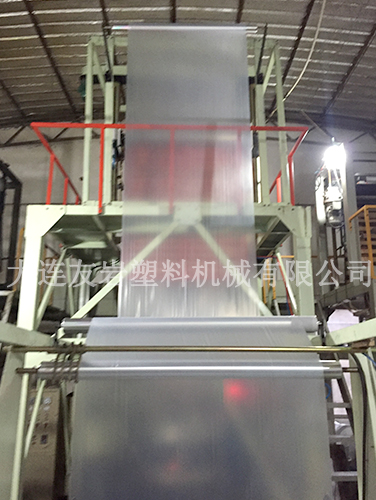
Dalian plastic blown film machine is an equipment used for producing plastic film, widely used in packaging, agriculture, construction and other fields. Its technical parameters directly affect the quality of the film, production efficiency, and the applicability of the equipment. The following are the main technical parameters and detailed explanations of the plastic blown film machine:
1. Equipment model
Equipment models are usually named based on their production capacity, structural characteristics, or application areas. For example, single-layer blown film machine, multi-layer co extrusion blown film machine, etc. The choice of model depends on production requirements and the intended use of the film.
2. Screw diameter
The diameter of the screw is one of the core parameters of the blown film machine, which directly affects the extrusion capacity and production efficiency of the equipment. The common range of screw diameters is from 30mm to 150mm. The larger the diameter of the screw, the greater the extrusion volume, which is suitable for producing thicker films or high-yield demand.
3. Length to diameter ratio (L/D)
The aspect ratio refers to the ratio of the length to the diameter of the screw, usually between 20:1 and 30:1. A higher aspect ratio facilitates the full melting and uniform mixing of plastics, making it suitable for producing high-quality films. A low aspect ratio may lead to insufficient plastic melting, affecting the physical properties of the film.
4. Extrusion volume
Extrusion volume refers to the amount of plastic that can be extruded by equipment per unit time, usually expressed in kilograms per hour (kg/h). The extrusion amount is affected by factors such as screw diameter, rotational speed, and type of plastic. High extrusion equipment is suitable for large-scale production, but requires corresponding cooling and traction systems.
5. Bubble diameter
The diameter of the membrane bubble refers to the maximum diameter of the membrane bubble formed during the blowing process, usually between 100mm and 2000mm. The diameter of the membrane bubble determines the width of the film and directly affects the size of the final product. The larger the diameter of the membrane bubble, the wider the produced film.
6. Film thickness
The thickness of the film is an important technical parameter of the blown film machine, usually measured in micrometers (μ m). The common range of film thickness is from 10 μ m to 200 μ m. The control of film thickness depends on factors such as extrusion rate, traction speed, and cooling effect. A high-precision thickness control system can produce uniform thin films.
7. Traction speed
Traction speed refers to the speed at which a film is pulled out of a bubble, usually expressed in meters per minute (m/min). The traction speed directly affects the thickness and production efficiency of the film. A higher traction speed can accelerate production, but it may lead to uneven film thickness or defects.
8. Cooling system
The cooling system is a key component of the blown film machine, which directly affects the formation and quality of the film. Common cooling methods include air ring cooling and internal cooling systems. An efficient cooling system can quickly cool film bubbles, preventing film deformation or bubble formation.
9. Heating power
Heating power refers to the power of the heating system of the blown film machine, usually expressed in kilowatts (kW). The heating power determines the melting rate and temperature control accuracy of plastic. Higher heating power can accelerate the melting of plastics, but it needs to be combined with a good temperature control system to avoid overheating or uneven temperature.
10. Motor power
Motor power refers to the power of the motor that drives the screw to rotate, usually expressed in kilowatts (kW). The motor power directly affects the speed and extrusion volume of the screw. Higher motor power is suitable for high-yield production, but it is necessary to ensure the mechanical strength and stability of the equipment.
11. Type of mold head
The mold head is a key component of the blown film machine, which directly affects the forming and quality of the film. Common types of die heads include spiral die heads, cross die heads, and annular die heads. The design of the mold head should ensure uniform distribution of plastic melt and avoid uneven thickness or defects in the film.
12. Control mode
The control methods of the blown film machine include manual control, semi-automatic control, and fully automatic control. The fully automatic control system can achieve precise control of parameters such as temperature, speed, thickness, etc., improving production efficiency and product quality. Modern blown film machines are usually equipped with PLC (Programmable Logic Controller) and touch screen operation interfaces for easy operation and monitoring.
13. Power supply voltage
The power supply voltage refers to the power supply required by the blown film machine, usually 220V, 380V or higher voltage. The choice of power supply voltage depends on the power of the equipment and the local power supply situation. High power equipment typically requires a three-phase power supply to ensure stable operation.
14. Equipment size and weight
The size and weight of the equipment affect its installation and transportation. The size of a blown film machine is usually determined by its production capacity and structural design, while its weight depends on the material and structural strength of the equipment. Large equipment requires a large installation space and a stable foundation.
15. Applicable materials
The blown film machine can process various plastic materials, such as polyethylene (PE), polypropylene (PP), polyvinyl chloride (PVC), etc. Different materials have different requirements for equipment, such as temperature control, screw design, etc. Choosing a suitable blown film machine requires consideration of the characteristics of the production materials.
16. Production speed
Production speed refers to the length of film that equipment can produce per unit time, usually expressed in meters per minute (m/min). The production speed is affected by factors such as extrusion volume, traction speed, and cooling effect. High production speed is suitable for large-scale production, but it is necessary to ensure the quality of the film.
17. Film width
The width of the film refers to the width of the final product, usually between 100mm and 3000mm. The control of film width depends on the diameter of the membrane bubble and the design of the traction system. Wide films are suitable for large packaging or agricultural cover films.
18. Temperature control accuracy
Temperature control accuracy refers to the ability of the blown film machine to control the heating system, usually expressed in degrees Celsius (℃). A high-precision temperature control system can ensure the uniform melting of plastic melt, avoiding defects or uneven physical properties of the film.
19. Equipment noise
Equipment noise refers to the level of noise generated by a blown film machine during operation, usually expressed in decibels (dB). Low noise equipment is suitable for use in places that require a quiet environment and also helps improve the working environment.
20. Maintenance and upkeep
The maintenance and upkeep requirements of the blown film machine are also important technical parameters. Good maintenance can extend the service life of equipment and reduce the failure rate. Regularly inspect key components such as screws, molds, and heating systems to ensure the normal operation of the equipment.
The technical parameters of plastic film blowing machines cover multiple aspects, including extrusion capacity, film size, and control system. Choosing a suitable blown film machine requires comprehensive consideration based on production needs, material characteristics, and product quality requirements. Understanding these technical parameters can help optimize the production process, improve the quality and production efficiency of thin films.